| c. 1400 CE–1468 CE | Johannes Gutenberg (People)#28, 29 | Mainz inventor who brought movable-type printing to Europe; produced the Gutenberg Bible. |
| c. 1405 CE | The Book of the City of Ladies (Ideas, printing and science)#30, 17 | Christine de Pizan's French-language argument defending women. |
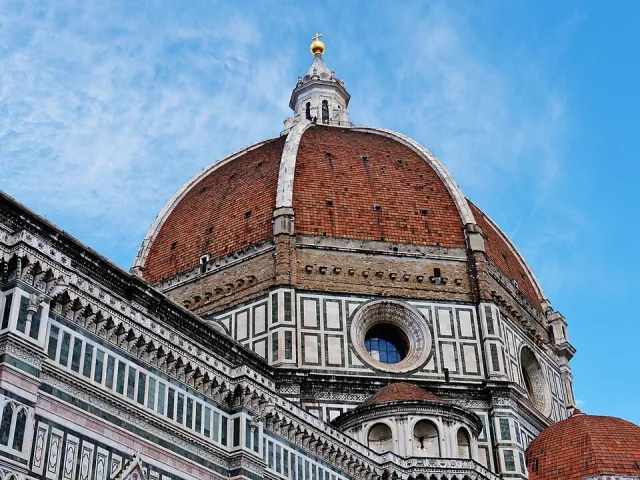
| 1420 CE–1436 CE | Florence Cathedral dome (Art and architecture)#31, 32 | Brunelleschi built it as a double brick shell, raised without centering. |
| 1425 CE–1452 CE | Ghiberti's Gates of Paradise (Art and architecture)#33, 32 | Gilded bronze doors for the east side of Florence's Baptistery. |
| 1432 CE | Ghent Altarpiece completed (The Renaissance outside Italy)#34, 35 | Polyptych by the Van Eyck brothers for Saint Bavo in Ghent, painted in oil on oak. |
| 1434 CE | Arnolfini Portrait (The Renaissance outside Italy)#36, 37 | Jan van Eyck's double portrait, now in London's National Gallery. |
| 1434 CE | Cosimo de' Medici returns to Florence (States, patrons and wars)#22, 23 | Back from a year's exile; Medici rule over Florence begins. |
| c. 1440 CE? | Donatello's bronze David (Art and architecture)#38, 35 | The first free-standing nude bronze made since antiquity; housed in the Bargello, Florence. |
| 1440 CE | Valla exposes the Donation of Constantine (Ideas, printing and science)#39, 40 | Humanist philology shows the papal land-grant document to be a forgery. |
| c. 1445 CE–1510 CE | Sandro Botticelli (People)#41, 42 | Florentine painter of Primavera and The Birth of Venus, close to the Medici circle. |
| 1 January 1449 CE–April 1492 CE | Lorenzo de' Medici (People)#43, 44 | Ruled Florence, patronized Botticelli and wrote poetry. |
| c. 1450 CE | Gutenberg's printing press (Ideas, printing and science)#29, 28 | Set up movable-type printing in Mainz; the Gutenberg Bible followed in the mid-1450s. |
| 1450 CE | Francesco Sforza becomes Duke of Milan (States, patrons and wars)#45, 46 | A condottiere who seized Milan and founded the Sforza dynasty. |
| 15 April 1452 CE–2 May 1519 CE | Leonardo da Vinci (People)#47, 48 | Painter and engineer who kept notebooks; worked in Florence, Milan and France. |
| 29 May 1453 CE | Fall of Constantinople (States, patrons and wars)#49, 50 | Mehmed II's Ottoman forces took the city, ending the Byzantine Empire. |
| 9 April 1454 CE | Peace of Lodi (States, patrons and wars)#51, 52 | Ended the war between Milan and Venice and laid the ground for the Italic League. |
| 1455 CE? | Gutenberg Bible printed (Ideas, printing and science)#53, 54 | Latin Bible printed at Mainz, with 42 lines on each page. |
| 1469 CE?–1536 CE | Erasmus (People)#55, 56 | Dutch humanist who wrote In Praise of Folly and produced a Greek edition of the New Testament. |
| 3 May 1469 CE–21 June 1527 CE | Niccolò Machiavelli (People)#57, 58 | Florentine diplomat turned political writer; wrote The Prince. |
| 21 May 1471 CE–6 April 1528 CE | Albrecht Dürer (People)#59, 60 | Painter and printmaker from Nuremberg; known for Italian journeys and a theory of proportion. |
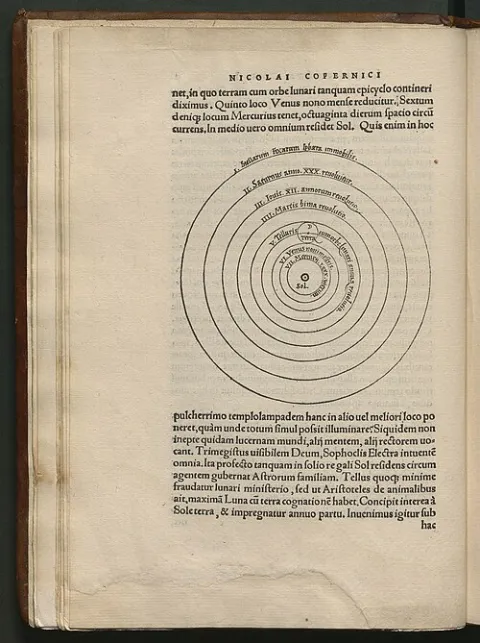
| 19 February 1473 CE–24 May 1543 CE | Nicolaus Copernicus (People)#61, 62 | Polish astronomer who set out his heliocentric theory in De revolutionibus. |
| 1474 CE–1539 CE | Isabella d'Este (People)#63, 64 | Marchioness of Mantua, a leading patron and collector. |
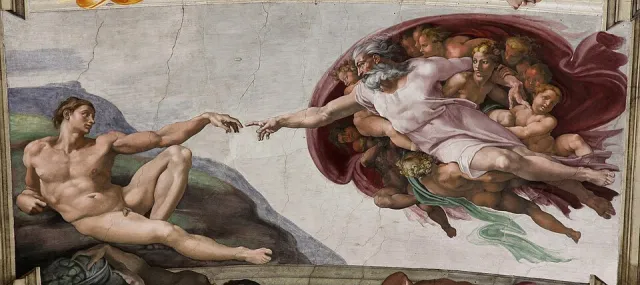
| 6 March 1475 CE–18 February 1564 CE | Michelangelo (People)#65, 66 | Sculptor, painter and architect; his works include David, the Sistine ceiling and St Peter's dome. |
| 1476 CE | Caxton sets up press at Westminster (The Renaissance outside Italy)#67, 68 | His Westminster shop ran England's first printing press. |
| 1478 CE–6 July 1535 CE | Thomas More (People)#69, 70 | English lawyer and author of Utopia, executed under Henry VIII. |
| 26 April 1478 CE | Pazzi conspiracy (States, patrons and wars)#71, 44 | Attack in Florence's cathedral killed Giuliano de' Medici; Lorenzo escaped. |
| c. 1482 CE–1499 CE | Leonardo at the Sforza court, Milan (States, patrons and wars)#47, 72 | Served Ludovico Sforza until the French invasion ended his Milan stay. |
| 1483 CE–6 April 1520 CE | Raphael (People)#73, 74 | Painter and architect from Urbino; his Vatican rooms include the School of Athens. |
| c. 1484 CE?–c. 1486 CE | Botticelli's Birth of Venus (Art and architecture)#75, 76 | Tempera on canvas, painted for a Medici villa and now held by the Uffizi. |
| c. 1488 CE?–27 August 1576 CE | Titian (People)#77, 78 | Venetian painter, Frari Assumption. |