Ancient Greece Timeline

This timeline covers Ancient Greece from c. 2000 BCE to 31 BCE: the Bronze Age of the Minoans and Mycenaeans, the Greek Dark Ages, the Archaic and Classical periods, and the Hellenistic period. Six lanes put periods and states, politics and colonies, wars, culture, philosophy and people next to one another. Reading across a year shows what was happening in each of them at the same time.

Period covered
c. 2000 BCE – 31 BCE
Entries
90
Lanes
6
Context entries
2 (to 30 BCE)
Key dates
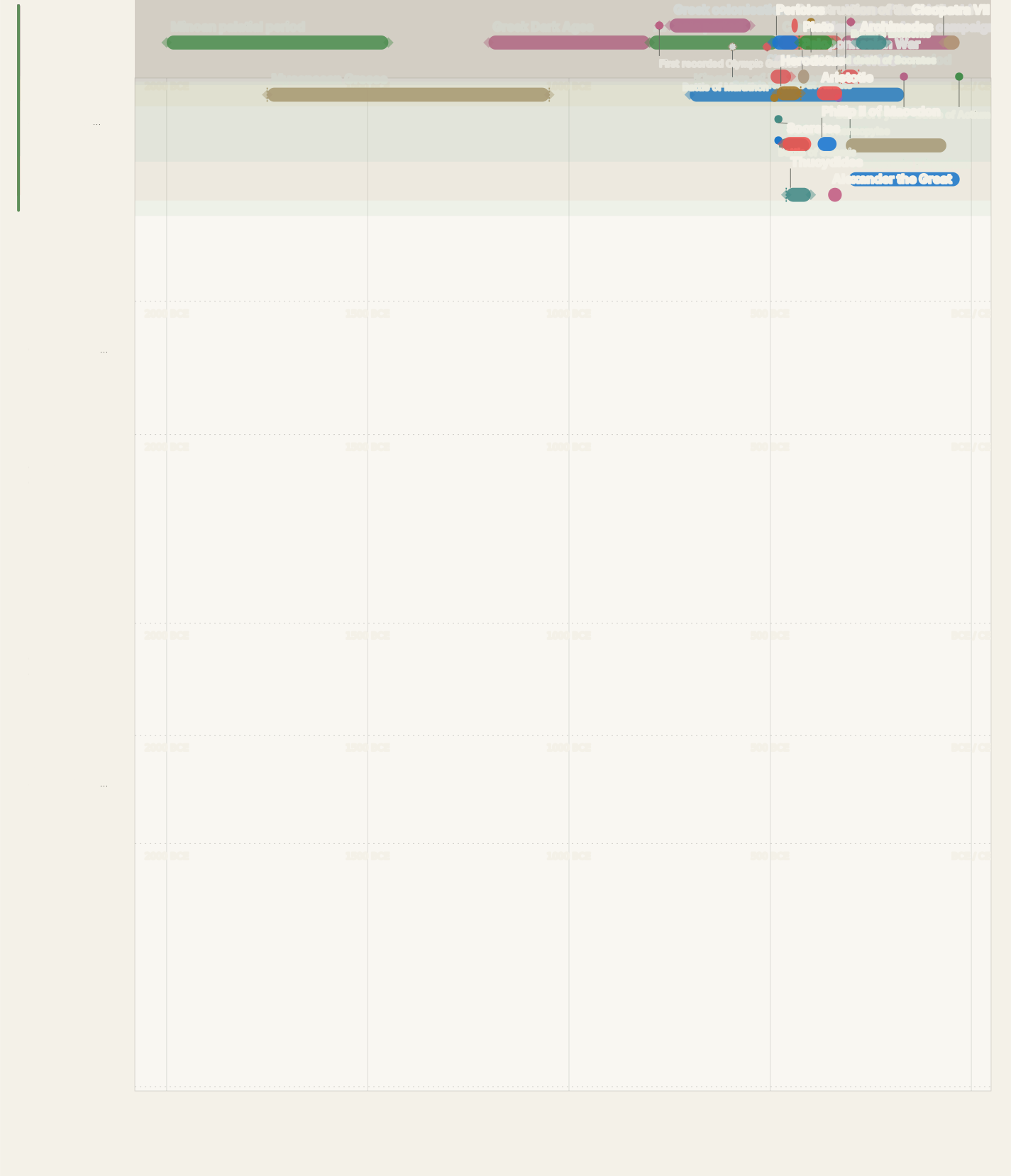
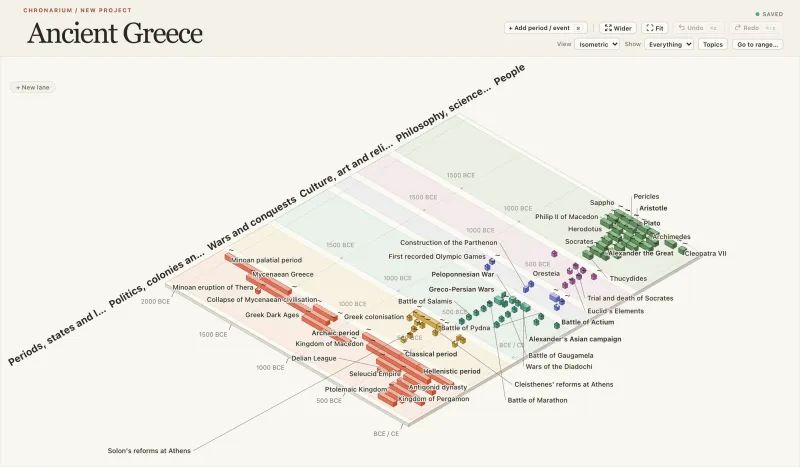
Chronarium’s picture of the Ancient Greece timeline, major entries only, 2079 BCE – 49 CE. Lanes: Periods, states and leagues, Politics, colonies and reforms, Wars and conquests, Culture, art and religion, Philosophy, science and history writing, People.

Loading the live app…

Show the whole picture
· made by Chronarium’s Export → Picture, Major only · open the SVG (217 KB)
In the picture: 37 of 90 entries (major only) · all 90 in the table belowPicture range: 2079 BCE – 49 CE

In the table, "c." marks an approximate date, which the timeline draws with a fading band, and "?" marks an uncertain one: published sources disagree. The table below lists all 90 entries under 5 period headings.

Story

Story by period

The Bronze Age: Minoans and Mycenaeans

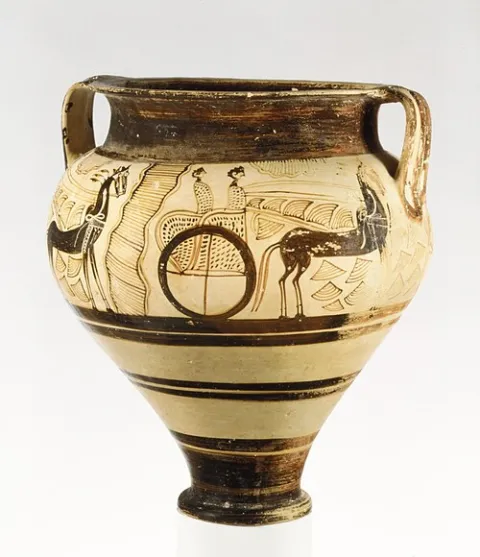
Mycenaean chariot krater, painted terracotta
Mycenaean chariot krater, painted terracotta, Metropolitan Museum of Art, New YorkImage: Metropolitan Museum of Art · CC0 · Wikimedia CommonsIn the table: Mycenaean Greece

On Crete, the Minoans built their first palaces c. 2000 BCE, among them the palace at Knossos. The palaces were centres of government, economic life and religion. Minoan art depicts bull-leaping, a sport that seems to have carried religious meaning. Mycenaean culture took shape on the Greek mainland under Minoan influence. The volcano on Thera, modern Santorini, erupted and buried the island's settlements, among them the town of Akrotiri, in pumice and ash. Fire destroyed many Cretan palaces and settlements c. 1450 BCE.

The Mycenaeans, Greeks from the mainland, then established themselves on Crete, chiefly at Knossos. They adapted the Minoans' Linear A into Linear B to write Greek, their own language. Later, a wave of destruction swept across mainland Greece: Mycenaean palaces were burned, and their sites declined. Scholars suggest several possible causes of the collapse: internal unrest, climate change and the Sea Peoples, perhaps in combination. After Mycenaean civilization ended came what is often called the Greek Dark Age.

The Greek Dark Ages

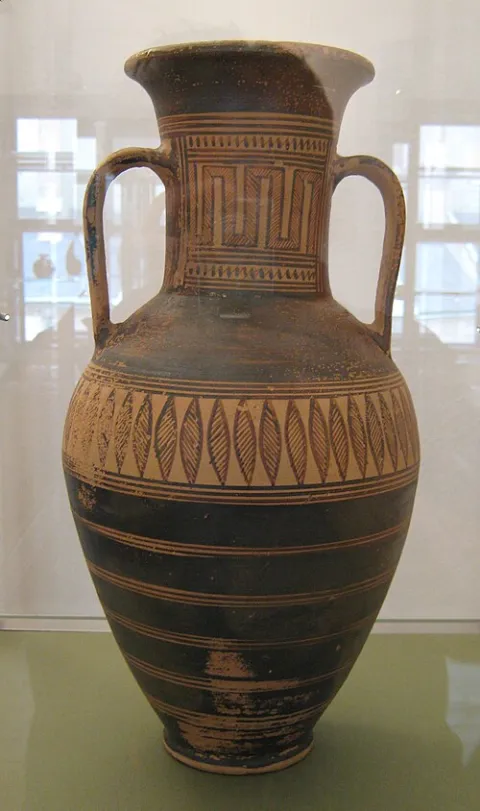
Attic Geometric neck amphora, terracotta
Attic Geometric neck amphora, terracotta, Antikenmuseum, Leipzig UniversityImage: Marcus Cyron · CC BY-SA 3.0 · Wikimedia CommonsIn the table: Greek Dark Ages

The Greek Dark Ages stretched from c. 1200 BCE to c. 800 BCE. When the Mycenaean palaces fell, their script, Linear B, dropped out of use, and for centuries the Greeks, it seems, had no writing. Greece's population fell. People lived scattered among small farming villages, a peasant society with no cities, and local strongmen, or chiefs, took charge instead of the old Mycenaean aristocracy. Greek tradition remembered a “Dorian invasion”, though historians now see it as one of several migrations that resettled Greece.

Iron replaced bronze in tools and weapons. At Lefkandi, on Euboea, graves show ties with Cyprus and Egypt; the community there was neither poor nor isolated. Late in the period, the population started to grow again and trade revived. Tales of a heroic age spread by word of mouth, an oral tradition that lay behind Homer's epics. Trade put Greeks in touch with Phoenician merchants, whose alphabet they would later borrow. Greece then entered the Archaic period, the time when city-states arose.

The Archaic period

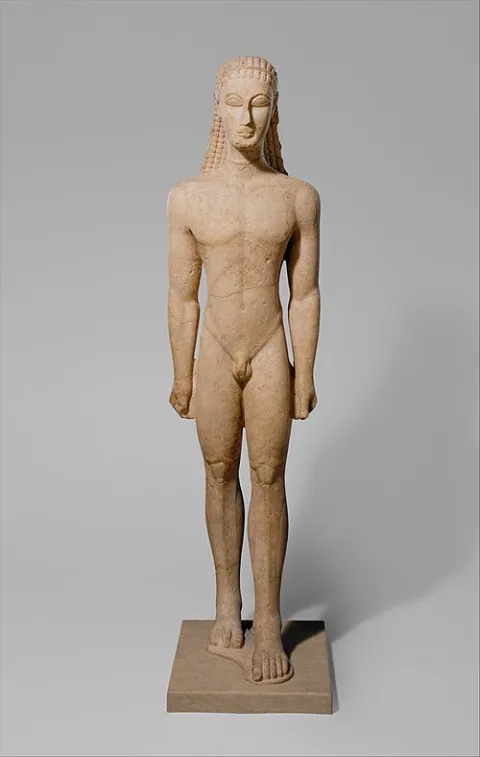
Marble kouros (New York Kouros), statue
Marble kouros (New York Kouros), statue, Metropolitan Museum of Art, New YorkImage: Metropolitan Museum of Art · CC0 · Wikimedia CommonsIn the table: Archaic period

Greece was a land of many small city-states, the poleis, kept apart by mountains and the sea. The Greeks adapted the alphabet of the Phoenicians to write their own language. The first recorded Olympic Games, held c. 776 BCE, were a festival for Zeus at Olympia. Commercial interests helped drive the poleis to found colonies overseas. Colonisation spread the Greek way of life, along with Greek settlements, as far afield as North Africa and Spain.

Lyric poetry reached new heights, with Sappho of Lesbos among its most admired poets. Thales of Miletus sought causes for natural events within nature itself, not in the gods' actions. In Athens, Draco wrote down the first code of laws c. 621 BCE. To relieve a debt crisis, Solon freed the Athenians enslaved for debt. His new law code replaced Draco's harsh laws, keeping only the laws on homicide. Peisistratus then ruled Athens as tyrant until his death, when his sons Hippias and Hipparchus succeeded him.

A Spartan army expelled Hippias from Athens, ending the rule of Peisistratus's family. Cleisthenes' reforms handed ordinary Athenians more political power, and he is regarded as Athenian democracy's founder. Ionian Greeks, with Athenian help, rose against Persian rule; Darius I made Athens's role his reason to invade Greece. In 490 BCE, Greek forces under Athenian leadership defeated the Persian invaders at Marathon. Themistocles persuaded Athens to put surplus silver-mine income into warships, readying a large fleet against a Persian invasion. Marathon did not end Persia's ambitions; Darius's successor, Xerxes, prepared a huge and full-scale invasion of Greece.

The Classical period

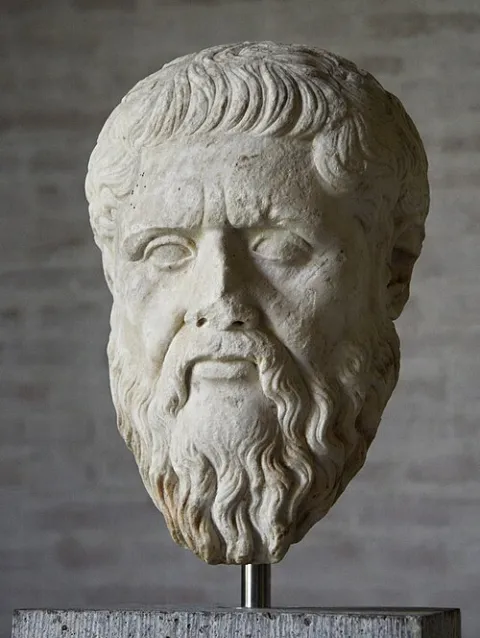
Head of Plato, Roman copy of a Greek portrait
Head of Plato, Roman copy of a Greek portrait, Glyptothek, MunichImage: Zde · CC BY-SA 3.0 · Wikimedia CommonsIn the table: Plato

At Thermopylae, Greek forces under Leonidas held the pass for three days against the Persians before losing it. At Salamis, with Themistocles shaping strategy, the Greek fleet defeated the Persian navy after luring it into a narrow strait. At Plataea, the Greek army overcame the Persian land army, whose commander Mardonius was killed. Athens went on to lead the Delian League, an alliance of Greek city-states that formed against Persia. Athens grew to dominate its allies and spent league money rebuilding the Athenian temples the Persians had destroyed.

Under Pericles, Athens rebuilt on a grand scale, with the Parthenon among its works. The Peloponnesian War (431 BCE–404 BCE) placed Athens and its allies on one side, Sparta and its allies on the other. A plague swept Athens early in the fighting, and Pericles was among the dead. An Athenian expedition to Sicily met with disaster after Spartan troops helped Syracuse end the siege. A final defeat at Aegospotami forced Athens into peace with Sparta, and the Delian League was dissolved. Athens also tried the philosopher Socrates for impiety and condemned him to death.

At Leuctra in 371 BCE, Epaminondas of Thebes defeated Sparta and broke its military dominance of Greece. He won his final battle but died in it; soon after, Theban power faded. Philip II of Macedon then defeated Athens and its allies at Chaeronea, and the Greek city-states passed under Macedonian rule. Philip planned a Greek war on Persia; after his death, Alexander, his son, took his place and carried it forward. In his campaign in Asia, Alexander overthrew the Persian Empire and then carried the war into India. His conquests spread Greek thought and customs through Asia, all the way to India.

The Hellenistic period

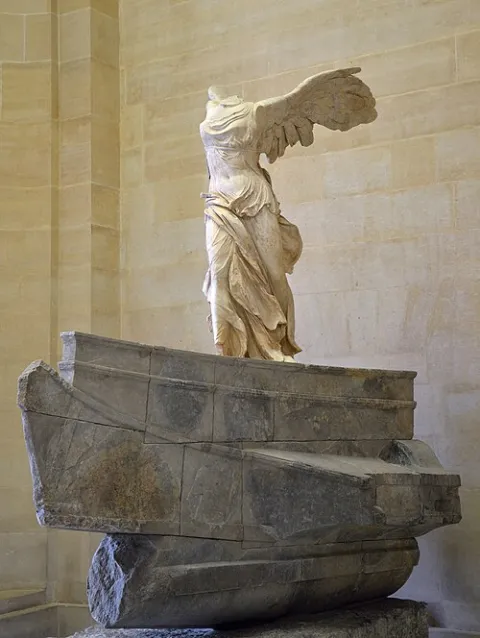
Winged Victory of Samothrace, marble statue
Winged Victory of Samothrace, marble statue, Louvre, ParisImage: Shonagon · CC0 · Wikimedia CommonsIn the table: Winged Victory of Samothrace

Alexander the Great died without a clear heir. That left his generals, the Diadochi, fighting one another for the empire. At Ipsus in 301 BCE, some generals allied against Antigonus, and he died in the battle. New kingdoms rose from the breakup of Alexander's empire, among them those ruled by the Seleucid and Ptolemaic dynasties. These kingdoms spread Greek culture and mixed it with the traditions of the peoples they ruled. In Athens, Zeno of Citium taught at a stoa, the place that gave his philosophy school the name Stoic.

Euclid, a mathematician in Alexandria c. 300 BCE, wrote the Elements, a treatise on geometry. When Rome defeated King Perseus at Pydna, the Macedonian kingdom came to an end. In 146 BCE the Achaean League lost a war to Rome, and Corinth was sacked. Attalus III of Pergamon died without an heir, leaving his kingdom to Rome. Octavian's defeat of Mark Antony and Cleopatra VII at Actium ended Ptolemaic rule in Egypt, and with it the last Hellenistic kingdom fell to Rome.

Ancient Greece timeline in Chronarium, Isometric view
Chronarium, Isometric viewall 90 entries · ancient-greece.chronarium.json

Entries

Entries by period

c. approximate date · ? the sources give different dates · Scope the sources date different definitions of it · rows run by start date · how the dates are checked

The Bronze Age: Minoans and Mycenaeans

c. 2000 BCE – c. 1201 BCE · 4 entries · selective coverage
DateEventNote
c. 2000 BCE–c. 1450 BCEMinoan palatial period (Periods, states and leagues)#1, 2Crete's Bronze Age palace culture, with Knossos among its centres.
c. 1750 BCE?–c. 1050 BCE?Mycenaean Greece (Periods, states and leagues)#3, 4Mainland Greece's Late Bronze Age palace states, including Mycenae and Pylos.Sources differ: Wikipedia c. 1750–1050 BC; World History Encyclopedia c. 1700–1100 BCE; National Archaeological Museum, Greece, 1600–1100 BCE.
c. 1600 BCE?Minoan eruption of Thera (Periods, states and leagues)#5, 6The Santorini volcano buried Akrotiri; Minoan Crete felt the effects.Sources differ: Wikipedia circa 1600 BC; Cornell University c. 1609–1560 BCE; World History Encyclopedia 17th century BCE.
c. 1230 BCE?–c. 1050 BCE?Collapse of Mycenaean civilisation (Periods, states and leagues)#3, 4Palace destruction comes in stages as Mycenaean sites dwindle into villages.Sources differ: World History Encyclopedia c. 1230–1100 BCE; Wikipedia c. 1200–1050 BC; Yale University 1200–1100 BCE.

The Greek Dark Ages

c. 1200 BCE – c. 801 BCE · 1 entry · selective coverage
DateEventNote
c. 1200 BCE–c. 800 BCEGreek Dark Ages (Periods, states and leagues)#7, 8Decline after Mycenae's fall; writing returns only with the alphabet.

The Archaic period

c. 800 BCE – 481 BCE · 27 entries
DateEventNote
c. 800 BCE?Greek alphabet adopted from Phoenician (Culture, art and religion)#9, 10Greeks add vowels; the script spreads across the city-states.Sources differ: World History Encyclopedia says 800–700 BCE; Wikipedia and Yale University say about 800 BCE.
c. 800 BCE–480 BCEArchaic period (Periods, states and leagues)#11, 12The era of the Greek city-states: colonisation, tyrants and early lawgivers.Scope: Dates follow Wikipedia, c. 800-480 BCE. World History Encyclopedia dates it c. 800-479 BCE or 800-500 BCE; the Metropolitan Museum of Art's art period runs c. 700-480 BCE.
c. 776 BCEFirst recorded Olympic Games (Culture, art and religion)#13, 14Games held for Zeus at Olympia, with a single foot race.
c. 750 BCE–c. 550 BCEGreek colonisation (Politics, colonies and reforms)#15, 16Greek cities plant colonies around the Mediterranean and Black Sea coasts.
c. 733 BCEFounding of Syracuse (Politics, colonies and reforms)#17, 18Corinthian colonists settle Ortygia, Sicily.
c. 700 BCE–168 BCEKingdom of Macedon (Periods, states and leagues)#19, 20Kings included Philip II and Alexander.Scope: Dates run to 168 BCE, when Rome abolished the monarchy (Wikipedia, Encyclopedia.com). World History Encyclopedia instead ends the kingdom at c. 146 BCE, with the Roman annexation of Macedon.
c. 667 BCE?Founding of Byzantium (Politics, colonies and reforms)#21, 22Megarian colony by the Bosporus, later Constantinople.Sources differ: 667 BCE (Wikipedia) or c. 657 BCE (World History Encyclopedia).
c. 631 BCEFounding of Cyrene (Politics, colonies and reforms)#23, 24Colony from Thera, settled in Libya under Battus I.
c. 630 BCE?–c. 570 BCESappho (People)#25, 26Lyric poet from Lesbos; wrote love poetry.Sources differ: About 630 BCE (Wikipedia) or about 620 BCE (World History Encyclopedia).
c. 630 BCE?–c. 560 BCESolon (People)#27, 28Athenian poet who served as statesman and lawmaker.Sources differ: World History Encyclopedia c. 640-560 BCE, Wikipedia and Encyclopedia.com c. 630-560 BCE.
c. 624 BCE?–c. 547 BCEThales of Miletus (People)#29, 30Ionian philosopher counted among the Seven Sages.Sources differ: Internet Encyclopedia of Philosophy c. 620-546 BCE, Wikipedia c. 626/623-548/545 BCE, University of St Andrews c. 624-547 BCE.
c. 621 BCEDraco's law code (Politics, colonies and reforms)#31, 32Athens' first written law code, remembered for very harsh penalties.
c. 600 BCEFounding of Massalia (Politics, colonies and reforms)#15, 33Phocaean colony planted at Marseille, on the coast of Gaul.
c. 594 BCE?Solon's reforms at Athens (Politics, colonies and reforms)#27, 28As archon, Solon sweeps aside Draco's code, sparing only the laws on homicide.Sources differ: World History Encyclopedia gives c. 594 BCE, with c. 580-570 BCE also possible; Wikipedia gives 594 BC, Encyclopedia.com 594 BCE.
28 May 585 BCEEclipse of Thales (Philosophy, science and history writing)#34, 35Solar eclipse halts a Lydian-Median battle; Thales is credited.
c. 570 BCE?–c. 495 BCE?Pythagoras (People)#36, 37Samian philosopher whose Croton school studied geometry and number.Sources differ: World History Encyclopedia c. 571–497 BCE; Wikipedia c. 570–495 BC; University of St Andrews c. 570–490 BCE.
c. 550 BCE–c. 366 BCEPeloponnesian League (Periods, states and leagues)#38, 39Alliance of Peloponnesian states led by Sparta.
546 BCE–c. 510 BCETyranny of the Peisistratids at Athens (Politics, colonies and reforms)#40, 41Peisistratus rules, then his sons Hippias and Hipparchus; Hippias is expelled.
c. 540 BCE?–480 BCELeonidas I (People)#42, 43Spartan king remembered for falling at Thermopylae while leading the Greek stand.Sources differ: History.com c. 530–480 B.C.; Wikipedia born c. 540 BC, died 11 August 480 BC; Encyclopedia.com c. 530–480 BCE.
c. 524 BCE–c. 459 BCEThemistocles (People)#44, 45Athenian statesman and admiral behind Salamis.
c. 508 BCECleisthenes' reforms at Athens (Politics, colonies and reforms)#46, 47Ten tribes and demes; Athenian democracy.
499 BCE–493 BCEIonian Revolt (Wars and conquests)#48, 49Ionian Greeks rise up against Persian rule, with help from Athens.
499 BCE–c. 449 BCEGreco-Persian Wars (Wars and conquests)#50, 51City-states fighting the Achaemenid Empire.
c. 496 BCE–c. 406 BCESophocles (People)#52, 53Wrote Oedipus Rex and Antigone.
c. 495 BCE–429 BCEPericles (People)#54, 55Athenian statesman who led Athens through its Golden Age.
490 BCEBattle of Marathon (Wars and conquests)#56, 57Athens defeats the first Persian invasion on Attic shores.
c. 484 BCE–c. 425 BCE?Herodotus (People)#58, 59Historian from Halicarnassus and author of the Histories.Sources differ: World History Encyclopedia c. 484-425/413 BCE; Wikipedia c. 484-425 BCE; Zondervan, Encyclopedia of the Bible 484-425 BCE.

The Classical period

480 BCE – 324 BCE · 35 entries
DateEventNote
c. 480 BCEBattle of Himera (Wars and conquests)#60, 61A victory where Gelon of Syracuse crushes Hamilcar's Carthaginians.
c. 480 BCE?–c. 406 BCEEuripides (People)#62, 63Athenian writer of tragedies, author of Medea and The Bacchae.Sources differ: World History Encyclopedia c. 484-407 BCE; Wikipedia c. 480-406 BCE; Encyclopedia.com c. 480-406 BCE.
c. 480 BCE–323 BCEClassical period (Periods, states and leagues)#64, 65The age of Athenian democracy, the Peloponnesian War, drama and philosophy.Scope: Dates follow c. 480-323 BCE, Salamis to Alexander's death (Wikipedia infobox; Metropolitan Museum of Art). Other spans: 510-323 BCE (Wikipedia lead), c. 510-323 BCE, 500-400 BCE (World History Encyclopedia).
480 BCEBattle of Salamis (Wars and conquests)#66, 67Themistocles leads the Greek fleet to victory in the Saronic Gulf.
480 BCEBattle of Thermopylae (Wars and conquests)#68, 69Leonidas' Greeks hold the pass; Persia takes the victory.
479 BCEBattle of Plataea (Wars and conquests)#70, 71A Greek army led by Sparta defeats Mardonius.
478 BCE–404 BCEDelian League (Periods, states and leagues)#72, 73Alliance led by Athens against Persia; it grew into an Athenian empire.
c. 469 BCE–399 BCESocrates (People)#74, 75Athenian philosopher put on trial and executed by his own city.
c. 460 BCE?–c. 400 BCEThucydides (People)#76, 77Athenian general who chronicled the Peloponnesian War.Sources differ: World History Encyclopedia gives c. 460/455–399/398 BCE, Wikipedia and Encyclopedia.com give c. 460–c. 400 BCE.
c. 460 BCE–c. 370 BCEHippocrates (People)#78, 79Physician from Kos who split medicine apart from philosophy.
458 BCEOresteia (Culture, art and religion)#80, 81Aeschylus' trilogy of tragedies, winner of the top prize at the Dionysia.
447 BCE–432 BCEConstruction of the Parthenon (Culture, art and religion)#82, 83Temple of Athena on Athens' Acropolis, designed by Ictinus and Callicrates.
431 BCE–404 BCEPeloponnesian War (Wars and conquests)#84, 85Athens against Sparta; ends with Athens' surrender in 404.
430 BCE–426 BCE?Plague of Athens (Wars and conquests)#86, 87An epidemic that killed a large share of the population of Athens.Sources differ: End year uncertain: EBSCO Research Starters gives 430–427 BCE, Wikipedia and International Journal of Infectious Diseases give 430–426 BCE.
c. 428 BCE?–c. 347 BCEPlato (People)#88, 89Athenian philosopher who founded the Academy and wrote the Dialogues.Sources differ: Birth: Internet Encyclopedia of Philosophy gives 428-7 B.C.E, Wikipedia c. 428 BC, University of St Andrews 427 BCE; World History Encyclopedia has 424/423 BCE.
c. 420 BCE?–362 BCEEpaminondas (People)#90, 91Theban general, won at Leuctra.Sources differ: Birth year uncertain: World History Encyclopedia c. 420, Wikipedia 419/411, Encyclopedia.com c. 425 BCE.
415 BCE–413 BCESicilian Expedition (Wars and conquests)#17, 92Athens loses its fleet and army at Syracuse.
399 BCETrial and death of Socrates (Philosophy, science and history writing)#74, 93Convicted of impiety at Athens; he is put to death with hemlock.
c. 387 BCE?Plato founds the Academy (Philosophy, science and history writing)#94, 95Plato's school near Athens.Sources differ: Founding year uncertain: Encyclopedia.com c. 387, Wikipedia ca. 387, Internet Encyclopedia of Philosophy 387–383 BCE.
384 BCE–322 BCEAristotle (People)#96, 97Philosopher and scientist who taught Alexander and founded the Lyceum.
382 BCE–336 BCEPhilip II of Macedon (People)#98, 99Father of Alexander and king of Macedon; assassinated.
c. 375 BCE–316 BCEOlympias (People)#100, 101Princess of Epirus, wife of Philip II and mother of Alexander
371 BCEBattle of Leuctra (Wars and conquests)#102, 103Epaminondas leads Thebes to victory over Sparta.
371 BCE–362 BCETheban hegemony (Politics, colonies and reforms)#104, 105Epaminondas makes Thebes the leading power in Greece.
c. 366 BCE–282 BCE?Ptolemy I Soter (People)#106, 107Alexander's general, founded Ptolemaic Egypt.Sources differ: Death: 282 BCE in World History Encyclopedia, January 282 BC in Wikipedia, 283 BCE in Encyclopedia.com.
c. 358 BCE?–281 BCESeleucus I Nicator (People)#108, 109A general of Alexander who went on to found the Seleucid Empire.Sources differ: Birth: World History Encyclopedia gives c. 358 BCE, Wikipedia c. 358 BC, Encyclopedia.com c. 358 BCE; its text also gives 358 to 354 BCE.
356 BCE–323 BCEAlexander the Great (People)#110, 111King of Macedon who conquered the Persian Empire.
341 BCE–270 BCEEpicurus (People)#112, 113From Samos, he founded the Epicurean school in Athens.
August 338 BCEBattle of Chaeronea (Wars and conquests)#114, 115Athens and Thebes fall to Philip II; Greece passes under Macedon.
337 BCE?League of Corinth (Politics, colonies and reforms)#116, 117Greek states bound into an alliance under Philip II of Macedon.Sources differ: 337 BCE (World History Encyclopedia); 338 BC/337 BC (Wikipedia); 337 BCE (Oxford University Press).
335 BCEAristotle founds the Lyceum (Philosophy, science and history writing)#96, 118The Peripatetic school Aristotle established in Athens.
c. 334 BCE–c. 262 BCEZeno of Citium (People)#119, 120Cypriot philosopher; founded the Stoic school
334 BCE–323 BCEAlexander's Asian campaign (Wars and conquests)#110, 111Alexander conquers Persia and pushes on to India.
331 BCEFounding of Alexandria (Politics, colonies and reforms)#121, 122Alexander founds a port city in Egypt.
1 October 331 BCEBattle of Gaugamela (Wars and conquests)#123, 124Alexander defeats Darius III for the final time.

The Hellenistic period

323 BCE – 31 BCE · 23 entries
DateEventNote
323 BCE?–281 BCE?Wars of the Diadochi (Wars and conquests)#125, 126Alexander's generals battle one another for control of his empire.Sources differ: World History Encyclopedia, EBSCO Research Starters and Bryn Mawr Classical Review give 323–281 BCE; Wikipedia has 322-272 BCE.
323 BCE–31 BCEHellenistic period (Periods, states and leagues)#127, 128Begins with Alexander's death and ends with Octavian's victory at Actium.
June 323 BCEDeath of Alexander the Great (Wars and conquests)#110, 111Died in Babylon with no heir chosen.
312 BCE–63 BCESeleucid Empire (Periods, states and leagues)#129, 130Seleucus I founded this Asian successor state; capital moved from Babylon to Antioch.
c. 306 BCEEpicurus founds the Garden (Philosophy, science and history writing)#112, 113The school met in Athens and took its name from his garden.
306 BCE–168 BCEAntigonid dynasty (Periods, states and leagues)#131, 132Macedon's Hellenistic royal line; Rome ended it after Pydna.
305 BCE–30 BCEPtolemaic Kingdom (Periods, states and leagues)#133, 134Ptolemy I took the royal title; the dynasty ruled Egypt from Alexandria.
301 BCEBattle of Ipsus (Wars and conquests)#126, 135Antigonus I fell; Alexander's empire remained split.
c. 300 BCEEuclid's Elements (Philosophy, science and history writing)#136, 137A geometry textbook in thirteen books, written at Alexandria
c. 300 BCEZeno founds Stoicism (Philosophy, science and history writing)#119, 138Zeno taught his Stoic school at Athens' Painted Stoa
c. 287 BCE–c. 212 BCEArchimedes (People)#139, 140Inventor and mathematician of Syracuse; killed in his home city.
c. 282 BCE–133 BCEKingdom of Pergamon (Periods, states and leagues)#141, 142Attalid realm in Asia Minor, later bequeathed to Rome.
c. 280 BCE–226 BCE?Colossus of Rhodes (Culture, art and religion)#143, 144A bronze statue of Helios standing at Rhodes harbour until an earthquake felled it.Sources differ: Statue's date is uncertain: World History Encyclopedia c. 280–228/226 BCE; Wikipedia 280–226 BCE; Georgia State University, Hellenic Studies 280–226 BCE.
c. 280 BCE–146 BCEAchaean League (Periods, states and leagues)#145, 146Peloponnesian league closed after Roman war
c. 276 BCE–c. 195 BCEEratosthenes (People)#147, 148A scholar born at Cyrene who spent his career working in Alexandria.
c. 240 BCEEratosthenes measures Earth's circumference (Philosophy, science and history writing)#149, 150Used shadow angles in Syene and Alexandria to work out Earth's size.
c. 190 BCEWinged Victory of Samothrace (Culture, art and religion)#151, 152A marble Nike mounted on a ship's prow, now held in the Louvre.
c. 190 BCE–c. 120 BCEHipparchus (People)#153, 154Astronomer from Nicaea; compiled a star catalogue and found the precession of the equinoxes.
c. 170 BCE?Pergamon Altar (Culture, art and religion)#155, 156A great altar honoring Zeus at Pergamon, decorated with a Gigantomachy frieze.Sources differ: Wikipedia, Staatliche Museen zu Berlin and Museum With No Frontiers put the start near 170 BCE; EBSCO Research Starters gives c. 180-175 BCE.
June 168 BCEBattle of Pydna (Wars and conquests)#157, 158Rome defeated Perseus, ending the Macedonian monarchy.
146 BCERoman sack of Corinth (Wars and conquests)#159, 160Mummius destroyed the city; Rome now ruled Greece.
c. 69 BCE–30 BCECleopatra VII (People)#161, 162Egypt's last Ptolemaic ruler, allied with Antony.
2 September 31 BCEBattle of Actium (Wars and conquests)#163, 164Octavian defeated Antony and Cleopatra off the Greek coast.

Project file

Get this timeline in Chronarium

This timeline opens in Chronarium on your Mac: download the free project file ancient-greece.chronarium.json. The 4-week free trial includes every feature and starts with an email address, no card.

ancient-greece.chronarium.jsonChronarium project file · JSON · 35 KB

CC BY 4.0: free to share and adapt, with credit to Chronarium

Download the free trial

4-week free trial. Full access, no card needed.macOS 13 or later.

Available for Mac

$39 per year · $79 lifetime

4-week free trial. Full access, no card needed.

Leave your email and we'll send the download link to open on your Mac.

Sources

Sources

Each entry cites two published references, linked with their publishers below, and every date was confirmed against a further independent source.

Report a correction · email support@chronarium.app with the entry's name or its # link · how the dates are checked

  1. World History Encyclopedia · worldhistory.org/Minoan_Civilization
  2. Wikipedia · en.wikipedia.org/wiki/Minoan_civilization
  3. World History Encyclopedia · worldhistory.org/Mycenaean_Civilization
  4. Wikipedia · en.wikipedia.org/wiki/Mycenaean_Greece
  5. World History Encyclopedia · worldhistory.org/Thera
  6. Wikipedia · en.wikipedia.org/wiki/Minoan_eruption
  7. World History Encyclopedia · worldhistory.org/Greek_Dark_Age
  8. Wikipedia · en.wikipedia.org/wiki/Greek_Dark_Ages
  9. World History Encyclopedia · worldhistory.org/Greek_Alphabet
  10. Wikipedia · en.wikipedia.org/wiki/Greek_alphabet
  11. World History Encyclopedia · worldhistory.org/Archaic_Period
  12. Wikipedia · en.wikipedia.org/wiki/Archaic_Greece
  13. World History Encyclopedia · worldhistory.org/Olympic_Games
  14. Wikipedia · en.wikipedia.org/wiki/Ancient_Olympic_Games
  15. World History Encyclopedia · worldhistory.org/Greek_Colonization
  16. Wikipedia · en.wikipedia.org/wiki/Greek_colonisation
  17. World History Encyclopedia · worldhistory.org/Syracuse
  18. Wikipedia · en.wikipedia.org/wiki/Syracuse,_Sicily
  19. Wikipedia · en.wikipedia.org/wiki/Macedonia_(ancient_kingdom)
  20. World History Encyclopedia · worldhistory.org/macedon
  21. World History Encyclopedia · worldhistory.org/Byzantium
  22. Wikipedia · en.wikipedia.org/wiki/Byzantium
  23. World History Encyclopedia · worldhistory.org/Cyrene
  24. Wikipedia · en.wikipedia.org/wiki/Cyrene,_Libya
  25. World History Encyclopedia · worldhistory.org/Sappho
  26. Wikipedia · en.wikipedia.org/wiki/Sappho
  27. World History Encyclopedia · worldhistory.org/Solon
  28. Wikipedia · en.wikipedia.org/wiki/Solon
  29. Internet Encyclopedia of Philosophy · iep.utm.edu/thales
  30. Wikipedia · en.wikipedia.org/wiki/Thales_of_Miletus
  31. World History Encyclopedia · worldhistory.org/Dracos_Law_Code
  32. Wikipedia · en.wikipedia.org/wiki/Draconian_constitution
  33. Wikipedia · en.wikipedia.org/wiki/Massalia
  34. World History Encyclopedia · worldhistory.org/Thales_of_Miletus
  35. Wikipedia · en.wikipedia.org/wiki/Eclipse_of_Thales
  36. World History Encyclopedia · worldhistory.org/Pythagoras
  37. Wikipedia · en.wikipedia.org/wiki/Pythagoras
  38. World History Encyclopedia · worldhistory.org/Peloponnesian_League
  39. Wikipedia · en.wikipedia.org/wiki/Peloponnesian_League
  40. World History Encyclopedia · worldhistory.org/Pisistratus
  41. Wikipedia · en.wikipedia.org/wiki/Peisistratos
  42. History.com · history.com/articles/leonidas
  43. Wikipedia · en.wikipedia.org/wiki/Leonidas_I
  44. World History Encyclopedia · worldhistory.org/Themistocles
  45. Wikipedia · en.wikipedia.org/wiki/Themistocles
  46. World History Encyclopedia · worldhistory.org/Cleisthenes
  47. Wikipedia · en.wikipedia.org/wiki/Cleisthenes
  48. World History Encyclopedia · worldhistory.org/Ionia
  49. Wikipedia · en.wikipedia.org/wiki/Ionian_Revolt
  50. EBSCO Research Starters · ebsco.com/research-starters/history/greco-persian-wars
  51. Wikipedia · en.wikipedia.org/wiki/Greco-Persian_Wars
  52. World History Encyclopedia · worldhistory.org/Sophocles
  53. Wikipedia · en.wikipedia.org/wiki/Sophocles
  54. World History Encyclopedia · worldhistory.org/Pericles
  55. Wikipedia · en.wikipedia.org/wiki/Pericles
  56. World History Encyclopedia · worldhistory.org/marathon
  57. Wikipedia · en.wikipedia.org/wiki/Battle_of_Marathon
  58. World History Encyclopedia · worldhistory.org/Herodotus
  59. Wikipedia · en.wikipedia.org/wiki/Herodotus
  60. Wikipedia · en.wikipedia.org/wiki/Battle_of_Himera_(480_BC)
  61. Encyclopedia.com · encyclopedia.com/reference/encyclopedias-almanacs-transcripts-and-maps/himera
  62. World History Encyclopedia · worldhistory.org/Euripides
  63. Wikipedia · en.wikipedia.org/wiki/Euripides
  64. World History Encyclopedia · worldhistory.org/greece
  65. Wikipedia · en.wikipedia.org/wiki/Classical_Greece
  66. World History Encyclopedia · worldhistory.org/Battle_of_Salamis
  67. Wikipedia · en.wikipedia.org/wiki/Battle_of_Salamis
  68. World History Encyclopedia · worldhistory.org/thermopylae
  69. Wikipedia · en.wikipedia.org/wiki/Battle_of_Thermopylae
  70. World History Encyclopedia · worldhistory.org/Plataea
  71. Wikipedia · en.wikipedia.org/wiki/Battle_of_Plataea
  72. World History Encyclopedia · worldhistory.org/Delian_League
  73. Wikipedia · en.wikipedia.org/wiki/Delian_League
  74. World History Encyclopedia · worldhistory.org/Socrates
  75. Wikipedia · en.wikipedia.org/wiki/Socrates
  76. World History Encyclopedia · worldhistory.org/Thucydides
  77. Wikipedia · en.wikipedia.org/wiki/Thucydides
  78. World History Encyclopedia · worldhistory.org/Hippocrates
  79. Wikipedia · en.wikipedia.org/wiki/Hippocrates
  80. World History Encyclopedia · worldhistory.org/Aeschylus
  81. Wikipedia · en.wikipedia.org/wiki/Oresteia
  82. World History Encyclopedia · worldhistory.org/Parthenon
  83. EBSCO Research Starters · ebsco.com/research-starters/history/parthenon
  84. World History Encyclopedia · worldhistory.org/Peloponnesian_War
  85. Wikipedia · en.wikipedia.org/wiki/Peloponnesian_War
  86. EBSCO Research Starters · ebsco.com/research-starters/history/plague-athens
  87. Wikipedia · en.wikipedia.org/wiki/Plague_of_Athens
  88. Internet Encyclopedia of Philosophy · iep.utm.edu/plato
  89. Wikipedia · en.wikipedia.org/wiki/Plato
  90. World History Encyclopedia · worldhistory.org/Epaminondas
  91. Wikipedia · en.wikipedia.org/wiki/Epaminondas
  92. Wikipedia · en.wikipedia.org/wiki/Sicilian_Expedition
  93. Wikipedia · en.wikipedia.org/wiki/Trial_of_Socrates
  94. Encyclopedia.com · encyclopedia.com/humanities/encyclopedias-almanacs-transcripts-and-maps/academy
  95. Wikipedia · en.wikipedia.org/wiki/Platonic_Academy
  96. World History Encyclopedia · worldhistory.org/Aristotle
  97. Wikipedia · en.wikipedia.org/wiki/Aristotle
  98. EBSCO Research Starters · ebsco.com/research-starters/history/philip-ii-macedon
  99. Wikipedia · en.wikipedia.org/wiki/Philip_II_of_Macedon
  100. World History Encyclopedia · worldhistory.org/Olympias
  101. Wikipedia · en.wikipedia.org/wiki/Olympias
  102. World History Encyclopedia · worldhistory.org/Battle_of_Leuctra
  103. Wikipedia · en.wikipedia.org/wiki/Battle_of_Leuctra
  104. Wikipedia · en.wikipedia.org/wiki/Theban_hegemony
  105. HistoryOfWar.org · historyofwar.org/articles/wars_theban_hegemony.html
  106. World History Encyclopedia · worldhistory.org/Ptolemy_I
  107. Wikipedia · en.wikipedia.org/wiki/Ptolemy_I_Soter
  108. World History Encyclopedia · worldhistory.org/Seleucus_I_Nicator
  109. Wikipedia · en.wikipedia.org/wiki/Seleucus_I_Nicator
  110. World History Encyclopedia · worldhistory.org/Alexander_the_Great
  111. Wikipedia · en.wikipedia.org/wiki/Alexander_the_Great
  112. World History Encyclopedia · worldhistory.org/Epicurus
  113. Wikipedia · en.wikipedia.org/wiki/Epicurus
  114. World History Encyclopedia · worldhistory.org/Battle_of_Chaeronea
  115. Wikipedia · en.wikipedia.org/wiki/Battle_of_Chaeronea_(338_BC)
  116. World History Encyclopedia · worldhistory.org/Philip_II_of_Macedon
  117. Wikipedia · en.wikipedia.org/wiki/League_of_Corinth
  118. Wikipedia · en.wikipedia.org/wiki/Lyceum_(classical)
  119. EBSCO Research Starters · ebsco.com/research-starters/biography/zeno-citium
  120. Wikipedia · en.wikipedia.org/wiki/Zeno_of_Citium
  121. World History Encyclopedia · worldhistory.org/Alexandria
  122. Wikipedia · en.wikipedia.org/wiki/Alexandria
  123. World History Encyclopedia · worldhistory.org/Battle_of_Gaugamela
  124. Wikipedia · en.wikipedia.org/wiki/Battle_of_Gaugamela
  125. EBSCO Research Starters · ebsco.com/research-starters/history/wars-diadochi
  126. World History Encyclopedia · worldhistory.org/Wars_of_the_Diadochi
  127. World History Encyclopedia · worldhistory.org/Hellenistic_Period
  128. Wikipedia · en.wikipedia.org/wiki/Hellenistic_period
  129. World History Encyclopedia · worldhistory.org/Seleucid_Empire
  130. Wikipedia · en.wikipedia.org/wiki/Seleucid_Empire
  131. Wikipedia · en.wikipedia.org/wiki/Antigonid_dynasty
  132. EBSCO Research Starters · ebsco.com/research-starters/history/antigonid-dynasty
  133. World History Encyclopedia · worldhistory.org/Ptolemaic_Dynasty
  134. Wikipedia · en.wikipedia.org/wiki/Ptolemaic_Kingdom
  135. Wikipedia · en.wikipedia.org/wiki/Battle_of_Ipsus
  136. EBSCO Research Starters · ebsco.com/research-starters/biography/euclid
  137. Wikipedia · en.wikipedia.org/wiki/Euclid%27s_Elements
  138. Wikipedia · en.wikipedia.org/wiki/Stoicism
  139. World History Encyclopedia · worldhistory.org/Archimedes
  140. Wikipedia · en.wikipedia.org/wiki/Archimedes
  141. World History Encyclopedia · worldhistory.org/Pergamon
  142. Wikipedia · en.wikipedia.org/wiki/Attalid_dynasty
  143. World History Encyclopedia · worldhistory.org/Colossus_of_Rhodes
  144. Wikipedia · en.wikipedia.org/wiki/Colossus_of_Rhodes
  145. World History Encyclopedia · worldhistory.org/Achaean_League
  146. Wikipedia · en.wikipedia.org/wiki/Achaean_League
  147. World History Encyclopedia · worldhistory.org/Eratosthenes
  148. Wikipedia · en.wikipedia.org/wiki/Eratosthenes
  149. EBSCO Research Starters · ebsco.com/research-starters/history/eratosthenes-measures-earths-circumference
  150. Encyclopedia.com · encyclopedia.com/science/encyclopedias-almanacs-transcripts-and-maps/eratosthenes-calculates-circumference-earth
  151. Louvre · collections.louvre.fr/en/ark:/53355/cl010252531
  152. Wikipedia · en.wikipedia.org/wiki/Winged_Victory_of_Samothrace
  153. World History Encyclopedia · worldhistory.org/Hipparchus
  154. Wikipedia · en.wikipedia.org/wiki/Hipparchus
  155. Wikipedia · en.wikipedia.org/wiki/Pergamon_Altar
  156. Staatliche Museen zu Berlin · search.smb.museum/object/obj-829881
  157. World History Encyclopedia · worldhistory.org/Battle_of_Pydna
  158. Wikipedia · en.wikipedia.org/wiki/Battle_of_Pydna
  159. World History Encyclopedia · worldhistory.org/Corinth
  160. Wikipedia · en.wikipedia.org/wiki/Battle_of_Corinth_(146_BC)
  161. World History Encyclopedia · worldhistory.org/Cleopatra_VII
  162. Wikipedia · en.wikipedia.org/wiki/Cleopatra
  163. World History Encyclopedia · worldhistory.org/Battle_of_Actium
  164. Wikipedia · en.wikipedia.org/wiki/Battle_of_Actium