| 30 November 1874 CE–24 January 1965 CE | Winston Churchill (People)#1, 2 | British prime minister from 1940 to 1945, and again from 1951 to 1955. |
| 18 December 1878 CE–5 March 1953 CE | Joseph Stalin (People)#3, 4 | Ruled the Soviet Union and led it through the war. |
| 26 January 1880 CE–5 April 1964 CE | Douglas MacArthur (People)#5, 6 | American general who led Allied forces across the Southwest Pacific. |
| 30 January 1882 CE–12 April 1945 CE | Franklin D. Roosevelt (People)#7, 8 | US president from 1933 to 1945; died shortly before V-E Day. |
| 29 July 1883 CE–28 April 1945 CE | Benito Mussolini (People)#9, 10 | Italy's Fascist dictator, killed by partisans. |
| 4 April 1884 CE–18 April 1943 CE | Isoroku Yamamoto (People)#11, 12 | Japanese admiral who planned the Pearl Harbor attack; his plane was brought down over Bougainville. |
| 8 May 1884 CE–26 December 1972 CE | Harry S. Truman (People)#13, 14 | Became US president in April 1945 and gave the order for the atomic bombings. |
| 30 December 1884 CE–23 December 1948 CE | Hideki Tojo (People)#15, 16 | Japan's prime minister from 1941 to 1944, later hanged as a war criminal. |
| 31 October 1887 CE–5 April 1975 CE | Chiang Kai-shek (People)#17, 18 | Nationalist leader who headed China's fight against Japan. |
| 17 November 1887 CE–24 March 1976 CE | Bernard Montgomery (People)#19, 20 | British field marshal known for El Alamein and the Normandy campaign. |
| 20 April 1889 CE–30 April 1945 CE | Adolf Hitler (People)#21, 22 | Germany's Nazi dictator; died by suicide in his Berlin bunker. |
| 14 October 1890 CE–28 March 1969 CE | Dwight D. Eisenhower (People)#23, 24 | The Allies' supreme commander in Europe, later a US president. |
| 22 November 1890 CE–9 November 1970 CE | Charles de Gaulle (People)#25, 26 | Leader of the Free French Forces. |
| 15 November 1891 CE–14 October 1944 CE | Erwin Rommel (People)#27, 28 | German field marshal who commanded the Afrika Korps. |
| 26 December 1893 CE–9 September 1976 CE | Mao Zedong (People)#29, 30 | Chinese Communist leader; battled Japan as well as the Nationalists. |
| 1896 CE–1974 CE | Georgy Zhukov (People)#31, 32 | Soviet marshal whose forces captured Berlin. |
| 7 October 1900 CE–23 May 1945 CE | Heinrich Himmler (People)#33, 34 | Led the SS as Reichsführer; killed himself while held by the British. |
| 29 April 1901 CE–7 January 1989 CE | Hirohito (People)#35, 36 | Japan's emperor from 1926 to 1989. |
| 12 June 1929 CE–1945 CE | Anne Frank (People)#37, 38 | Jewish diarist born in Germany; died at Bergen-Belsen. |
| 18 September 1931 CE | Mukden Incident (Asia and the Pacific)#39, 40 | Japan staged a railway explosion, then took Manchuria. |
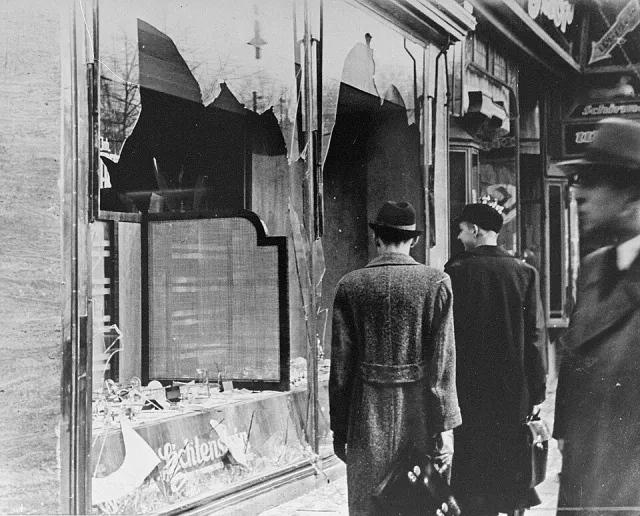
| 1933 CE–1945 CE | The Holocaust (The Holocaust and mass atrocities)#41, 42 | Nazi Germany persecuted and murdered Europe's Jews; about six million were murdered. |
| 30 January 1933 CE | Hitler appointed chancellor (Europe, the Atlantic and the air war)#43, 42 | Hindenburg named Hitler Germany's chancellor. |
| 7 July 1937 CE | Marco Polo Bridge Incident (Asia and the Pacific)#44, 45 | Japanese-Chinese clash near Beijing; full war followed. |
| 7 July 1937 CE–1945 CE | Second Sino-Japanese War (Asia and the Pacific)#46, 47 | Japan's war on China, later folded into the wider war. |
| 1937 CE–1938 CE? | Nanjing Massacre (Asia and the Pacific)#48, 49 | After taking Nanjing, Japanese troops massacre civilians and prisoners. |
| 12 March 1938 CE | Anschluss (Europe, the Atlantic and the air war)#50, 51 | German troops marched into Austria; a union law came the next day. |
| 30 September 1938 CE | Munich Agreement (Diplomacy, alliances and surrenders)#52, 53 | Handed the Sudetenland to Germany, with the Czechs shut out. |